
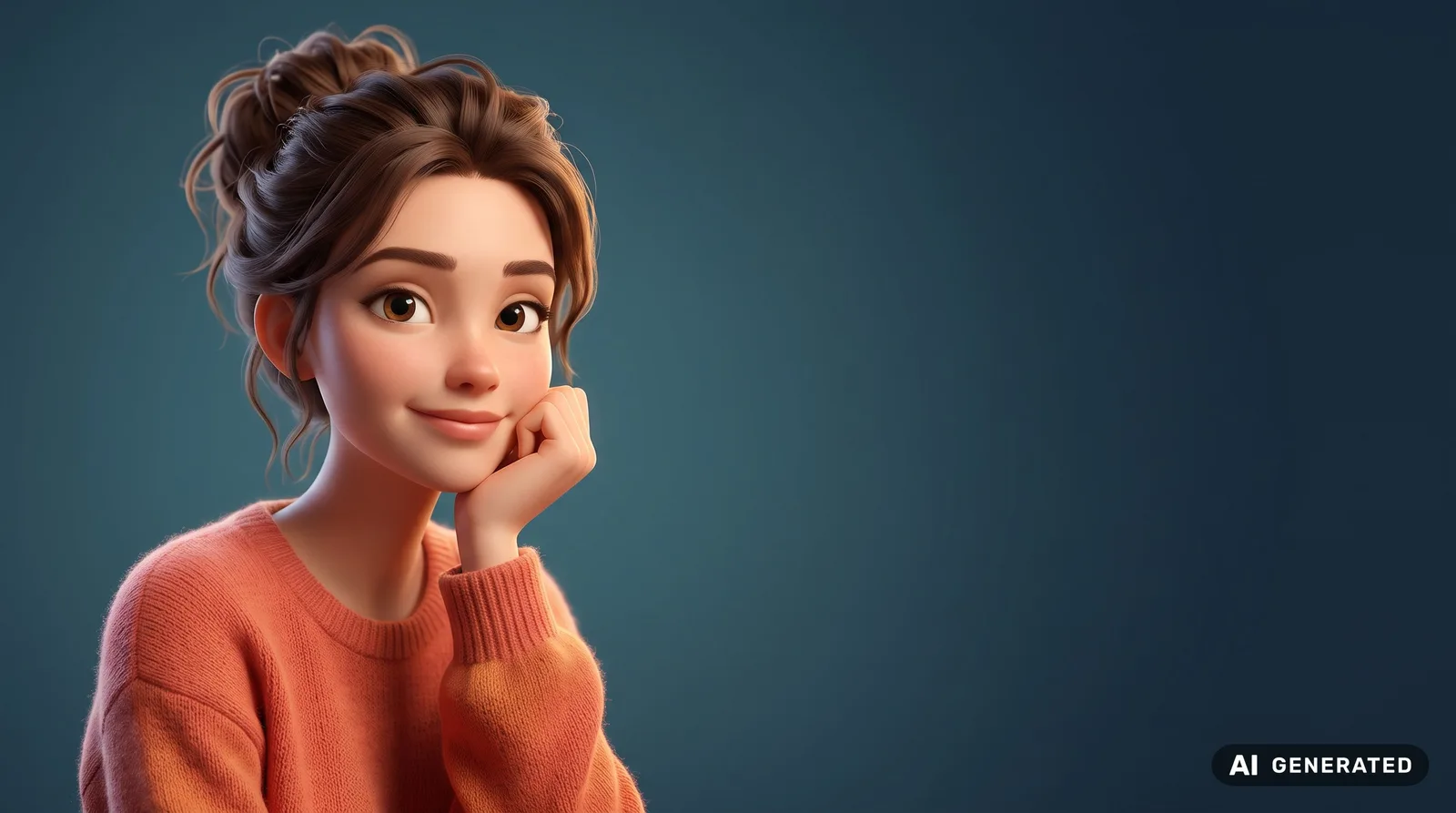
The same scene, several times
The same thing has happened to us a few times lately. We show a photo, and someone says: "That woman looks too artificial, it's definitely AI." Only then do they hear it's a real photograph. Nobody generated anything.
The surprise is often big. Not because someone got it wrong, since that happens to everyone. What surprises us is the direction of the mistake. Not long ago, the images that raised doubts were the ones pretending to be reality. Now doubt also falls on reality that looks too good or too smooth.
Suspicion before facts
The conclusion is fairly simple for us: people are now highly sensitive about authenticity, and they look for artificiality everywhere. Even where there isn't any. Suspicion is starting to outrun the facts. Viewers no longer analyse how an image was made. They judge it in a split second, based on a feeling.
This changes how you need to think about images in a project. A photo taken by a photographer can be read as generated. A graphic made with the help of AI can be read as an ordinary photograph. In both cases, what the viewer thinks becomes part of how the image is received, regardless of what happened in production.
What this means for working with images
We work with both photography and generative AI every day, so this lesson matters to us. "It looks generated" on its own is no longer proof of anything. How an image is received depends on what the viewer expects, not only on how it was made. So it's not wise to base decisions on a technique being undetectable, or on an image being fully "real."
If you're considering a creative project, this is a good moment to change the question. Instead of "does it look realistic?", it's better to ask whether the viewer expects this kind of image in this place. We look at a photo in a news report differently from a visualisation in a campaign, and differently again from a portrait on a company website. The same image can build trust in one place and cause unease in another.
Two questions instead of one
That's why on our projects we don't only ask whether something is well made. We ask a second question too: will the audience believe it makes sense in this place and this context? The first is about craft. The second is about trust.
In practice, this means it's worth settling at the very start of a project conversation what the audience expects and how we want them to read the image. Sometimes the answer will be to say plainly how the material was made. Sometimes a different kind of image will work better, one that doesn't raise the question at all. Well-made work is not enough today if the viewer doesn't believe it makes sense in its context.